
How GTA 6 is Changing the Future of Game Development Services in 2026
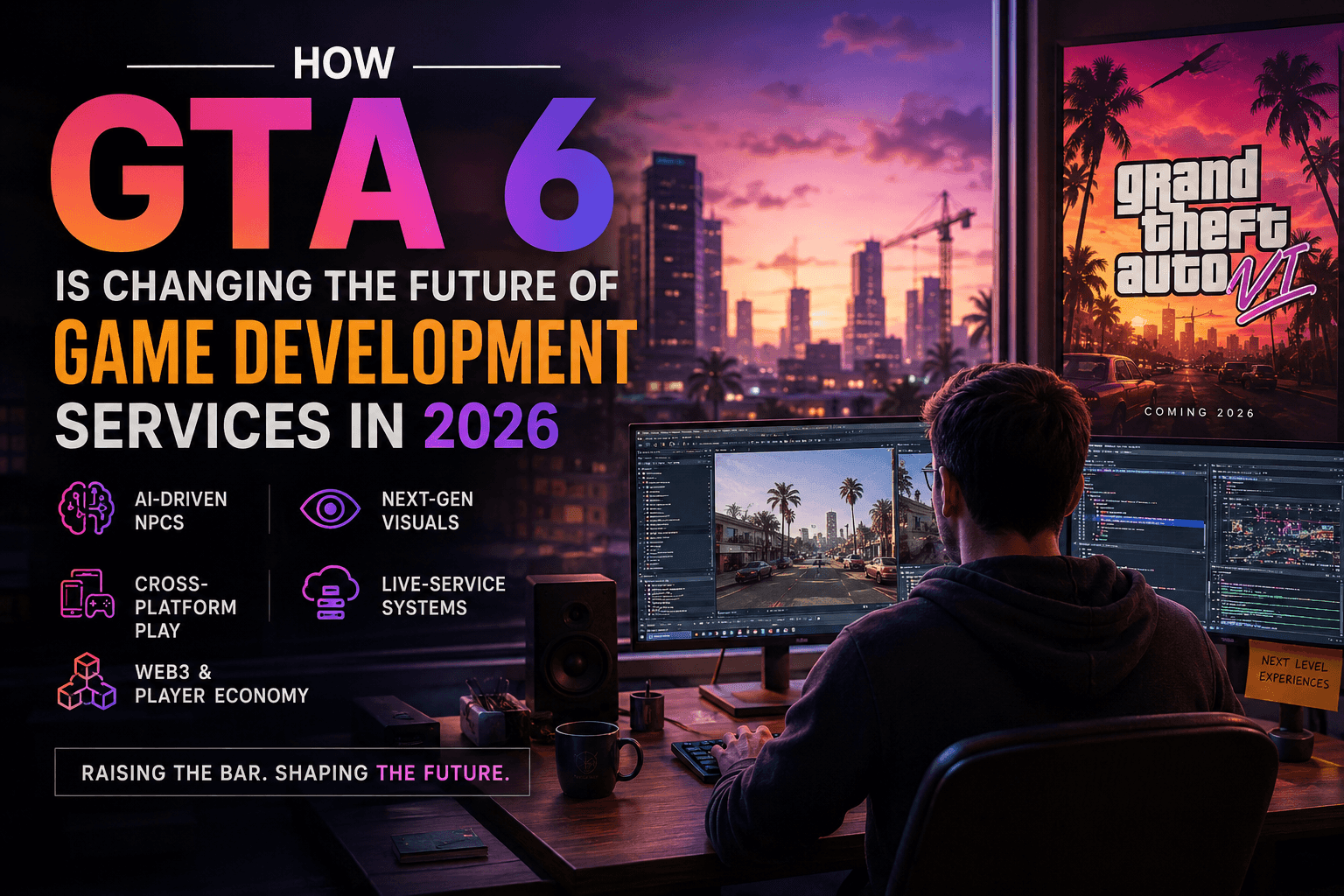
Nobody in the game development industry was ready for what that first GTA 6 trailer did. Not just to fans, but to studios. Within days of Rockstar dropping that footage, development leads at companies big and small were quietly pulling up their roadmaps and asking uncomfortable questions about where their own work stood. That kind of reaction doesn't happen because of marketing. It happens because what Rockstar showed was genuinely different, and everyone who builds games for a living knew it immediately.
GTA 6 still hasn't launched as of mid-2026. But if you're waiting for release day to start paying attention to what it means for game development, you've already missed the first half of the story.
Studios Are Benchmarking Against Something They Haven't Played Yet
The GTA 6 trailers showed open-world game development operating at a level most studios haven't come close to. Dynamic environments reacting in real time. NPC behavior that looks less like scripted logic and more like actual decision-making. A world that doesn't feel like a backdrop but like a place that exists whether the player is there or not.
Game development companies that used to point to map size or NPC count as selling points are quietly rethinking how they position their work. And clients notice. Businesses investing in custom game development services in 2026 are arriving with sharper questions and higher expectations than two years ago, a direct downstream effect of what GTA 6 has put into public view.
The AI Conversation Has Completely Shifted
Ask anyone working in AI in game development right now, and they'll tell you the same thing: the bar moved. GTA 6's previewed NPC systems aren't running on old behavior trees. What Rockstar has demonstrated points toward machine-learning-influenced models where characters adapt, remember, and respond contextually rather than executing predetermined scripts.
Studios offering custom game development services are now fielding requests for AI-driven systems that weren't on client radars 18 months ago. Adaptive difficulty. NPCs with genuine memory of player behavior. Personalized gameplay loops that shift based on how someone actually plays. These aren't wish-list features anymore; they're becoming expected deliverables.
This affects the cost to hire game developers meaningfully. A developer who understands Unreal Engine game development deeply and can implement AI behavior systems is genuinely harder to find and commands significantly higher rates. That gap is only going to grow.
The Visual Floor Just Got Raised for Everyone
The motion capture technology and real-time rendering work visible in GTA 6's trailers is extraordinary, but the more consequential thing is what it does to audience expectations across the entire market, not just at the AAA level. Players who watch that trailer and pick up a mid-budget title are now making comparisons they weren't making before.
What helps smaller studios is that Unreal Engine has genuinely democratized real-time rendering. Studios offering 3D game development services today can reach visual quality that once belonged exclusively to the biggest AAA gaming studios. Game development costs for high-fidelity visuals have dropped relative to output quality, and that's worth understanding clearly when budgeting a project, because assumptions from two or three years ago may no longer be accurate.
Live-Service and Cross-Platform Are Now the Default Expectation
GTA Online changed how the industry thinks about long-term engagement. GTA 6 is clearly built to extend that model further, with cross-platform gaming support and a live-service gaming infrastructure designed from the ground up for longevity.
For mobile game development services, this matters practically. Players don't think in platforms anymore; they think in games. If a title they love isn't accessible on their phone with proper cloud gaming technology behind it, that's friction, and friction kills retention.
Multiplayer game development in 2026 means building systems that sustain engagement across months and years. Seasonal content, evolving economies, and social systems that develop over time. Studios that haven't internalized this approach are going to feel the gap when clients start comparing proposals.
Web3 Is Hovering at the Edge of This Conversation
Rockstar hasn't announced anything blockchain-related for GTA 6 worth being clear about that. But the in-game economy they've previewed, with player-driven markets and deep asset customization, brushes up against the core premise of web3 game development services in ways that are hard to ignore.
Whether or not Rockstar steps into that space, GTA 6 may end up doing more to mainstream ideas around digital ownership and player economies than any dedicated blockchain game has managed so far.
Conclusion
GTA 6 will launch eventually. When it does, a lot of what the industry has been quietly preparing for will become very loud, very fast. Player expectations will shift publicly. Client briefs will change. The conversation about what makes a game feel modern will have a new reference point.
The studios best positioned aren't the ones that react to that moment. They're the ones treating GTA 6's trailers and confirmed development details as the starting gun; they already were investing now in scalable infrastructure, AI capability, cross-platform support, and next-gen game development practices before the market demands it publicly.
Ready to build the next big thing? TechReforms delivers custom game development services built for 2026 and beyond. Let's bring your vision to life