

iPad
- Camera ARFull support
- Cost per unit$$$
- IT frictionModerate
- Common in1:1 iPad districts

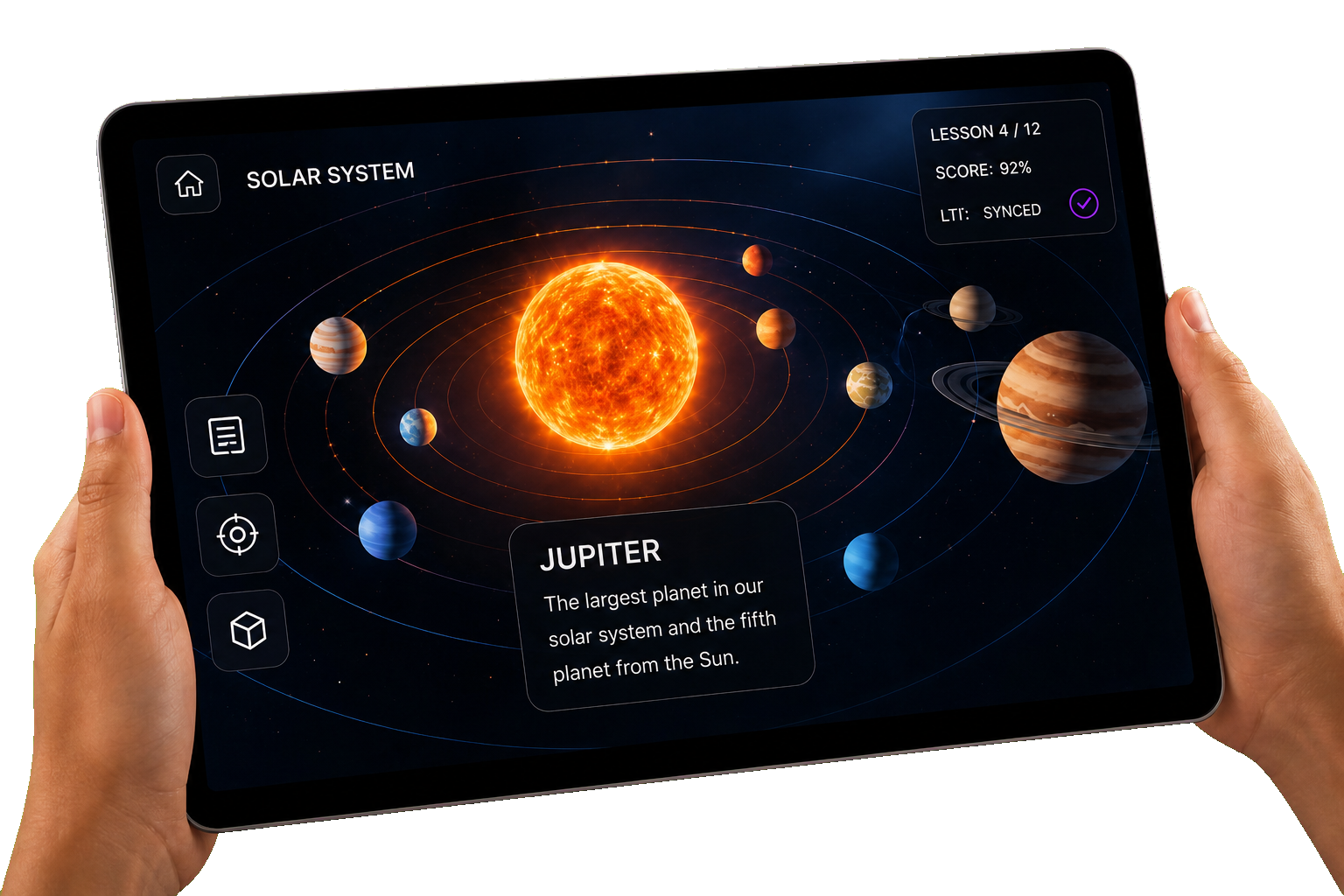
This is the question every education AR pitch skips, and it's the one that decides whether the tool gets used past the pilot. Camera-based AR needs specific hardware support — a lot of school-issued devices don't have it.

If your fleet is mostly Chromebooks, WebAR plus a small shared set of tablets for hands-on activities is usually the realistic path, not a full 1:1 native app.
Most programs pair one core AR experience with a lighter WebAR version, so nobody's left out by their device.
01 / Social Studies & History
Explore historical sites, ecosystems, or the solar system in the classroom, without the cost or logistics of an actual trip.
02 / Science
Run chemistry reactions, dissections, or physics demonstrations that are too costly, hazardous, or logistically hard to do live.
03 / Reading & Language
Textbook pages and vocabulary cards trigger 3D models, pronunciation, and interactive quizzes when scanned.
04 / Special Education
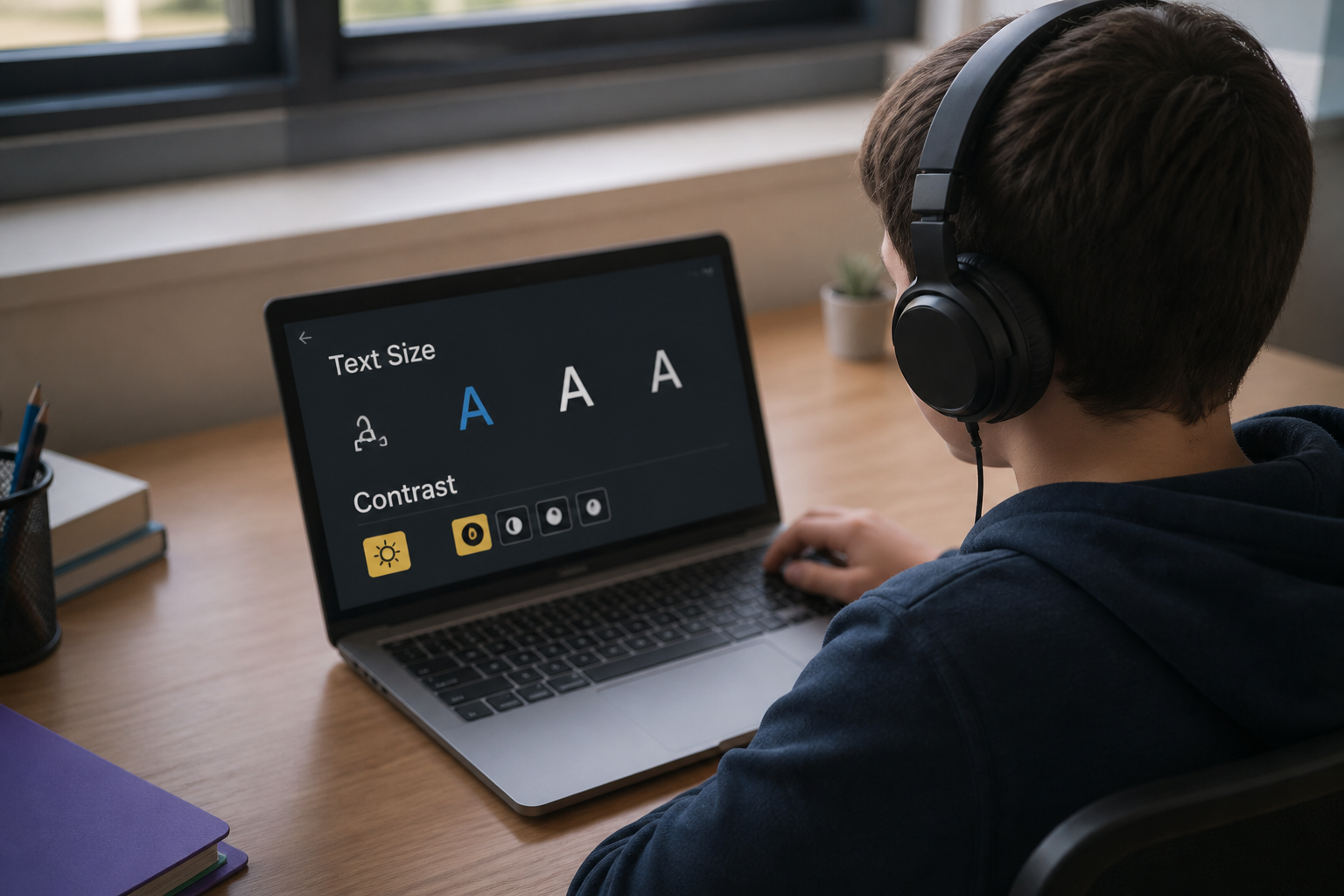
Visual and interactive overlays that support different learning needs, built to work alongside assistive technology, not around it.
05 / Language Learning
Point a device at real objects in the room to trigger vocabulary, pronunciation, and sentence practice in the target language.
06 / Higher Ed & Campus
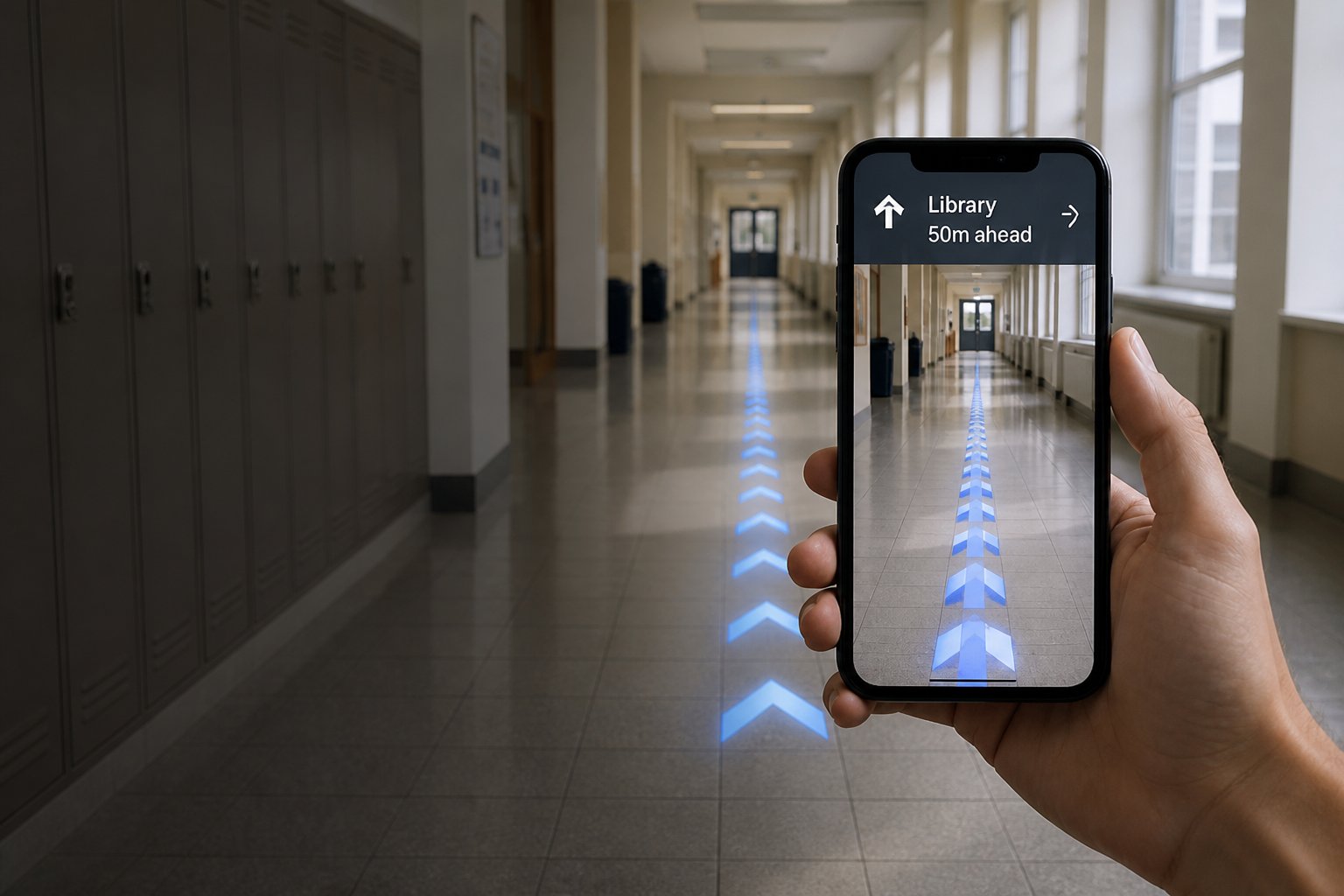
Indoor AR navigation and exhibit information for university campuses, science centers, and student orientation programs.
Three requirements that show up in almost every K-12 or district procurement conversation, regardless of subject.
Student Privacy
Minimal data collection, no behavioral advertising, and consent flows built into onboarding for any student under 13 — not bolted on after a district asks.
Standards Alignment
Content tagged to frameworks like NGSS or your state's standards, since review committees routinely reject tools that can't show curriculum fit.
LMS Integration
LTI-standard integration with Canvas, Google Classroom, and Schoology so completion and scores flow into gradebooks teachers already use.
Unlike most industries, the buying window here isn't flexible — districts adopt new tools at semester boundaries, not whenever development happens to finish.
Late Winter
Curriculum mapping and 3D content creation start, so build time doesn't eat into the summer training window.
Early Summer
A small pilot group of classrooms tests the tool and teachers get trained before the pressure of an active semester.
Fall Semester
Full rollout to the pilot's building or grade level, timed to the semester start when adoption is highest.
Following Year
Budget for wider rollout gets approved off pilot-year results, expanding to additional schools or the full district.
Ranges based on projects we've delivered — final scope depends on subject depth, device mix, and how much LMS integration is needed.
$20K – $45K
3-4 months
$40K – $85K
4-7 months
$70K – $150K
6-10 months
3D content creation is scoped separately, typically $5K–$25K depending on subject complexity and number of models. Full breakdown on the AR development page
Framework, timeline, and a fixed-price range before you commit to anything. See the full AR development process or how we've built for healthcare and enterprise training.